Dunia

August 31, 2013

Suriah siap sikapi militer AS


damaskus
Sikap suriah tentang kemungkinan terjadinya serangan militer AS.
Suriah benar-benar siap menghadapi kemungkinan serangan militer Amerika Serikat dan sekutu. Pemerintah Suriah memperkirakan serangan itu bisa terjadi setiap saat.

"Kami perkirakan serangan akan terjadi setiap saat. Kami siap untuk membalas setiap saat," kata seorang pejabat keamanan Suriah seperti dilansir kantor berita AFP, Sabtu (31/8/2013).

Hal ini disampaikan beberapa jam setelah tim inspeksi PBB meninggalkan Suriah, setelah selesai melakukan penyelidikan atas dugaan penggunaan senjata kimia oleh rezim Presiden Bashar al-Assad. Kepergian tim inspeksi PBB ini membuka peluang bagi kemungkinan serangan militer AS setelah Presiden Barack Obama mengisyaratkan bahwa intervensi militer bakal dilakukan.

Dikatakan Obama, dunia harus bertindak setelah warga sipil Suriah, termasuk wanita dan anak-anak tewas dalam serangan kimia. Obama mencetuskan, AS tengah mempertimbangkan aksi terbatas terhadap Suriah.

Obama menekankan dirinya belum membuat keputusan final soal melancarkan serangan militer terhadap rezim Assad. Namun dia mengisyaratkan bahwa serangan memang akan dilakukan.

Tim inspeksi PBB nantinya akan melaporkan langsung ke Sekjen PBB Ban Ki-moon dan menjelaskan kesimpulan mereka tentang apakah serangan gas beracun memang terjadi pada 21 Agustus lalu.

Menurut laporan intelijen yang dirilis pemerintah AS, rezim Assad diyakini telah melancarkan serangan kimia ke wilayah-wilayah pinggiran Damaskus pekan lalu. Serangan-serangan itu menewaskan 1.429 orang termasuk setidaknya 426 anak-anak

http://news.detik.com/read/2013/08/31/170859/2346009/1148/suriah-siap-balas-serangan-militer-as-setiap-saat?9922022 dan edited

August 26, 2013

White House Says, ‘Little Doubt’ of Chemical Attack by Syria


syria

Moving a step closer to possible American military action in Syria, a senior Obama administration official said on Sunday that there was “very little doubt” that President Bashar al-Assad’s military forces had used chemical weapons against civilians last week and that a Syrian promise to allow United Nations inspectors access to the site was “too late to be credible.”
The official, in a carefully worded written statement, said that “based on the reported number of victims, reported symptoms of those who were killed or injured, witness accounts and other facts gathered by open sources, the U.S. intelligence community, and international partners, there is very little doubt at this point that a chemical weapon was used by the Syrian regime against civilians in this incident.”
The statement, released on Sunday morning on the condition that the official not be named, reflected a marked shift in tone after President Obama’s meeting at the White House on Saturday with his national security team, during which advisers discussed options for military action.
The president, who warned a year ago that the use of chemical weapons by Syrian government forces would be a “red line,” has faced criticism from Congressional Republicans and others for failing to respond more forcefully to evidence of earlier, smaller-scale chemical attacks. Mr. Obama, who inherited two costly wars — in Iraq and Afghanistan — has been extremely reluctant to commit American military forces, even in the form of missile strikes, to another tangled conflict in the Middle East.
But on Sunday, the White House seemed to take a harder line, dismissing the Syrian promise of possible access by United Nations inspectors. That raised at least the possibility that a strike on Syrian targets would come soon, perhaps using cruise missiles fired from ships off shore.
Early Sunday, the White House said Syrian officials had refused to let the inspectors see the site of the attack. But Syrian television subsequently reported that there was an agreement to allow access beginning on Monday. The administration official who released the statement said the offer, even if sincere, might be meaningless because of the time that had already passed since the attack.
“The evidence available has been significantly corrupted as a result of the regime’s persistent shelling and other intentional actions over the last five days,” the official said.
The official, however, did not suggest that Mr. Obama had decided to take action. “We are continuing to assess the facts so the president can make an informed decision about how to respond to this indiscriminate use of chemical weapons,” the official said.
But by labeling as “indiscriminate” the attack on Wednesday in a Damascus suburb, which reportedly killed hundreds of civilians, the official suggested that the United States viewed the latest assault as different from the smaller suspected chemical attacks that had not provoked American military action.
The Syrian government has denied using chemical weapons, and on Saturday it said its soldiers had found chemical supplies in areas seized from rebel forces. Russia, an ally of the Syrian government, accused the rebels of using the weapons, but few analysts believe they have the supplies or ability to do so.
In response to Washington’s comments, Moscow cautioned against a rush to judgment. A spokesman for the foreign ministry, Aleksandr K. Lukashevich, said that those who advocated an armed response to any chemical weapons attack — without citing the United States or other countries — were prejudging the results of the United Nations inspections.
“In these conditions, we again resolutely call on all those who are trying to impose the results of the U.N. investigations and who say that armed actions against Syria is possible to show common sense and avoid tragic mistakes,” Mr. Lukashevich said in a statement released on Sunday evening on the ministry’s Web site. 
Syria warned that any American military action would “create a ball of fire that will inflame the Middle East,” according to The Associated Press. And Iranian state news media quoted the Tehran government as saying that any intervention by Washington would have severe consequences.  
Israel sharpened its message on Sunday, suggesting that the use of such weapons in the region should not go without a response.
“This situation must not be allowed to continue,” Prime Minister Benjamin Netanyahu said, referring to the Syrian civilians “who were so brutally attacked by weapons of mass destruction.”
“The most dangerous regimes in the world must not be allowed to possess the most dangerous weapons in the world,” he said.
Some Israelis have argued that international intervention in Syria would distract the world from the crucial effort to prevent a nuclear Iran. But there is a growing sense among Israelis that Syria is now a test of how the world might respond to Iran as it approaches the capability of making a nuclear weapon.
“Assad’s regime has become a full Iranian client, and Syria has become Iran’s testing ground,” Mr. Netanyahu added. “Now the whole world is watching. Iran is watching, and it wants to see what would be the reaction on the use of chemical weapons.”
In Washington, several lawmakers said on Sunday that they now expected limited military action to punish Syria or deter chemical attacks.
But lawmakers who appeared on Sunday talks show said it would be reckless to insert ground troops into a war in a region already in turmoil, and there was a general call for any action to be taken under the broadest possible international auspices.
“I hope the president, as soon as we get back to Washington, will ask for authorization from Congress to do something in a very surgical and proportional way,” Senator Bob Corker of Tennessee, the top Republican on the Senate Foreign Relations Committee, said on “Fox News Sunday.”
But Representative Eliot Engel of New York, the ranking Democrat on the House Foreign Affairs Committee, said the situation might be too urgent to wait for Congress, which does not return from its summer recess until Sept. 9. Mr. Engel suggested that there were many options for air attacks launched from outside Syrian airspace.
Senator Jack Reed, Democrat of Rhode Island and a member of the Armed Services Committee, said any military option should be carefully circumscribed. “We can’t let ourselves get into a situation where this becomes a springboard for general military operations in Syria to try to change the dynamic” of the hostilities there, Mr. Reed said on CBS’s “Face the Nation.” “This has to be an international operation. It can’t be a unilateral American approach.”
On Saturday, Doctors Without Borders, an international aid group, said that on the morning of the reported attack, medical centers it supported near the site received about 3,600 patients showing symptoms consistent with exposure to toxic nerve agents.
Of those, 355 died, the group said.
The statement was the first issued by an international organization working in Syria about Wednesday’s attack. Anti-government activists have said that hundreds of people were killed when government forces pelted the area with rockets spewing poisoned gas.
Doctors Without Borders said it could not confirm what substances caused the symptoms it reported on Saturday or who was responsible for the attack, but its report appeared to lend credibility to other accounts by witnesses and to the opposition’s estimates of the number of dead.
The aid group said the symptoms were reported by three medical facilities it supported in the area of the reported attack. The group’s statement said that during three hours on Wednesday morning, the clinics received patients who had symptoms indicating exposure to a chemical nerve agent, including breathing problems, dilated pupils, convulsions, foaming at the mouth and blurred vision. Many of the medics in the centers also experienced some symptoms, said Stephen Cornish, one of the group’s executive directors. One of the medics died.
“When you put these elements together,” Mr. Cornish said, “what it suggests to us is a neurotoxic agent.”
The Syrian Observatory for Human Rights said on Saturday that it had confirmed the deaths of 322 people in the attack, including 54 children, 82 women, 16 people who could not be identified and dozens of rebel fighters. The group, based in Britain, said its activists had visited the area, spoken to residents and collected medical reports and videos indicating that most of the people dead were killed by exposure to toxic gas.
Pentagon officials said Saturday that Gen. Martin E. Dempsey, the chairman of the Joint Chiefs of Staff, would leave for Jordan this weekend to attend a long-scheduled meeting of regional military chiefs at which the situation in Syria was certain to be discussed. Pentagon officials also said that the Navy had increased its presence in the eastern Mediterranean Sea to four destroyers, each carrying long-range Tomahawk cruise missiles similar to those launched in past American attacks on Afghanistan, Iraq and Libya.
The Navy historically has deployed two destroyers in the eastern Mediterranean, but it had added one more over recent months. The Navy’s commander in the region added a fourth, at least temporarily, by delaying a scheduled return to port for one warship and accelerating the arrival of its replacement. 

 Scott Shane reported from Washington and Ben Hubbard from Beirut, Lebanon. Reporting was contributed by Isabel Kershner from Jerusalem, Steven Lee Myers from Moscow, and Michael R. Gordon, Brian Knowlton and Thom Shanker from Washington. 
edited by niema.

Obama Seeks to Shame Colleges Into Easing Costs


BUFFALO — President Obama deplored the rising costs of college on Thursday as he tried to shame universities into holding down prices. He held out the prospect of more federal student aid if they did.
Speaking at the University at Buffalo, where tuition and fees now total about $8,000 per year for New York residents, Mr. Obama said the middle class and those struggling to rise out of persistent financial troubles were being unfairly priced out of American higher education.
“Colleges are not going to just be able to keep on increasing tuition year after year and passing it on to students,” Mr. Obama told an enthusiastic audience of about 7,200 students and others in the university’s auditorium. “We can’t price the middle class and everybody working to get into the middle class out of college.”
The president, who was on the first day of a two-day bus trip across New York and Pennsylvania, said rising prices at colleges were partly driven by the distribution of $150 billion in federal assistance to students. He said colleges that allowed tuition to soar should be penalized by getting less federal aid for their students, while colleges that held down costs should get more of the money.
He announced plans to create a federal rating system that would allow parents and students to easily compare colleges. And he said he would urge Congress to pass legislation to link the student aid to the rating system.
“It is time to stop subsidizing schools that are not producing good results,” Mr. Obama said to a roar of applause.
The president offered his college affordability proposals as part of a campaign to highlight efforts that his administration says will help the middle class.
Speaking to reporters on Air Force One, Arne Duncan, the education secretary, said the president’s plan aimed to change incentives for colleges that were not doing enough to keep down costs. “We want to see good actors be rewarded,” Mr. Duncan said. “We want to see them get more resources. And when we’re not seeing that kind of commitment, we want to challenge that status quo.”
Higher education experts generally agreed that the plan was important, but a number found the ratings worrisome. “It depends on having complete and accurate data, and there are some areas where the Department of Education does have good data, but others where it does not,” said Molly Corbett Broad, the president of the American Council on Education, the largest higher education trade organization.
For example, she said, the department’s statistics on graduation rates include only students who start and finish at the same institution. And, she said, it is unclear what leads students and families to the college choices they make.
“I’m all for analytics and analysis, but we just don’t know what information, and how much, helps students and families make good college decisions,” she said. “It’s very difficult to write an algorithm for how these decisions are made.”
Mr. Obama’s plan is certain to anger some college officials, who argue that their costs are affected by state funding decisions, the rising cost of health care and other factors outside their control. Mr. Duncan said the administration planned to move slowly as it created the ratings system, in part to listen to the concerns of university administrators.
The plan requires approval by Congress, and reaction on Thursday tended to fall along party lines. Representative John Kline, Republican of Minnesota and the chairman of the House Committee on Education and the Workforce, said in a statement that he was skeptical of Mr. Obama’s proposed rating system.
“I remain concerned that imposing an arbitrary college ranking system could curtail the very innovation we hope to encourage — and even lead to federal price controls,” Mr. Kline said. “As always, the devil is in the details.” 


Michael D. Shear reported from Buffalo, and Tamar Lewin from New York.
edited and publish by niema.

Syria car bomb kills Hama governor


State news agency says Anas Abdul-Razzaq Na'em was killed in the Jarajmeh neighbourhood of the city.


The governor of Hama, a senior figure in the Assad regime, has been killed in a car bomb explosion, accoring to the Syrian state state news agency Sana.
Dr Anas Abdul-Razzaq Na'em, a Sunni who was the head of the Baath party until 2011, was allegedly killed by a car bomb in the Jarajmeh neighbourhood of the city on Sunday.
The explosion occurred as Na'em was returning home in a convoy of vehicles in the evening. Another civilian died and several others were injured in the attack.
State TV blamed the attack on rebels.
"Terrorists assassinated...the Hama governor, in a car bomb attack," it said. No rebel group has claimed it carried out the attack.
Naem was appointed to the governorship in July 2011, four months after the beginning of the revolt against President Bashar al-Assad's regime.
He had replaced Khaled Abdel Aziz, who was sacked by Assad after hundreds of thousands of people protested against the regime. Government troops later crushed the dissent.
Assad's father and predecessor Hafez al-Assad crushed a Muslim Brotherhood uprising in the city in 1982, killing between 10,000 and 40,000 people.
Source:
Agencies

Egypt's Mubarak appears in court


Former president's trial to resume on September 14 while that of Muslim Brotherhood leaders adjourned to October 29.

Hosni Mubarak, the former Egyptian president, has appeared at his retrial on charges of complicity in the killings of protesters during the uprising that toppled him from power two years ago.
He was escorted by medical and security personnel on Sunday into an ambulance to be taken by helicopter from Maadi Military Hospital to the Cairo Police Academy, where he faced judges again before the trial was adjourned until September 14.
Mubarak's two sons and the former interior minister, Habib al-Adly, also appeared at the trial amid heavy security presence. The sons face charges of corruption while al-Adly is a co-defendant in the complicity case.

The judge ordered the creation of panels of experts to examine all charges. They will be sworn in at the next hearing, and will then have 30 days to investigate.
Al Jazeera's Wayne Hay, reporting from outside the academy, said Mubarak's initial appearance was procedural.
Mubarak, 85, was found guilty and sentenced to life in prison last year for complicity in the killing of about 900 protesters during the 18-day revolt against him in 2011.
He is being retried after his successful appeal against the previous conviction.
"The judge assured the public that the trial would be 'a very transparent process' and that people would be given access to the documents used as evidence in the case," our correspondent said.
Mubarak has been under house arrest after being released from detention last week.
Trial adjourned
Separately, the trial of Mohamed Badie, "spiritual leader" of Egypt's Muslim Brotherhood, and his two deputies, Khairat al-Shater and Rashad Bayoumy, was adjourned just minutes after it opened on Sunday.
The court adjourned the trial of the Brotherhood leaders and 32 other defendants till October 29 so that the defendants could be brought to court.
The men, who officials said did not appear in court for security reasons, are accused of inciting the murder of protesters.
Spotlight
Follow our ongoing coverage of the political crisis in Egypt
Sunday's hearing was the first in the proceedings against the senior Brotherhood leaders, who were detained after the removal of President Mohamed Morsi from power by the military on July 3.
According to security sources, at least 2,000 Brotherhood members have been arrested since August 14.
The son of Mohamed El-Beltagi, a Muslim Brotherhood leader and former member of parliament, was arrested on Sunday along with four other former legislators in Beni Suef, in Upper Egypt.
They are accused of inciting violence, disturbing public peace and possessing arms.
On the same day, Dawoud Khairat, a close aide of Mohamed al-Zawahri, brother of al-Qaeda leader Ayman al-Zawahri, was detained on accusations of inciting violence, committing vandalism acts and belonging to a "terrorist group".
The Interior Ministry announced on Saturday the arrest of Mohye Hamed, an adviser to Morsi.
Hazem el-Beblawi, Egypt's interim prime minister, said on Saturday that his government was putting priority on increasing security to restore peace and improve the country's economy.
He also dismissed accusations that Mubarak's release was a return to Egypt's old political order.
Source:
Al Jazeera and agencies


Fosil Dinosaurus Ditemukan di Jerman


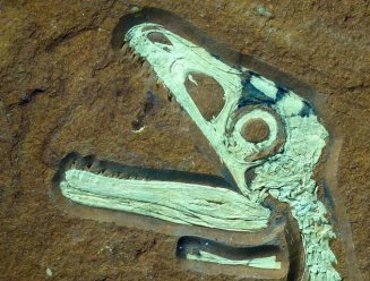
dinosaurus jermanPara peneliti Jerman telah menemukan sebuah fosil dinosaurus yang berbeda dari biasanya. Dinosaurus ini diyakini sebagai pemakan daging yang memiliki bulu, namun tidak satu famili dengan keluarga burung.

Diberitakan AFP, Selasa (3/7/2012), fosil ini diperkirakan hidup pada masa akhir Jurassic, 170 juta tahun yang lalu. Para peneliti yang bergerak berasal dari National Academy of Sciences, Jerman menemukan fosil di kawasan Bavaria, Jerman.

Fosil ini dinamai Sciurumimus albersdoerferi karena berbulu, lalu memiliki ekor seperti tupai. "Ini adalah fosil megalosauroid terlengkap," tulis studi tersebut.

Megalosauroid adalah nama kelompok karnivora yang memiliki panjang hingga 9 meter dan berat satu ton.

Saat ditemukan, fosil hewan itu dalam posisi taring yang menganga dan ekor yang memanjang di atas kepalanya.

Sebelumnya, para peneliti di China juga telah menemukan spesies dinosaurus unik yang diyakini sebagai kerabat Tyrannosaurus Rex. Fosil itu diyakini seberat mobil dan berbulu. Spesies baru itu akhirnya dinamai Yutyrannus huali, campuran nama dari latin dan mandarin yang berarti, "si tiran cantik yang berbulu".

January 07, 2013

Norman Schwarzkopf Jenderal Amerika Serikat Meninggal Dunia


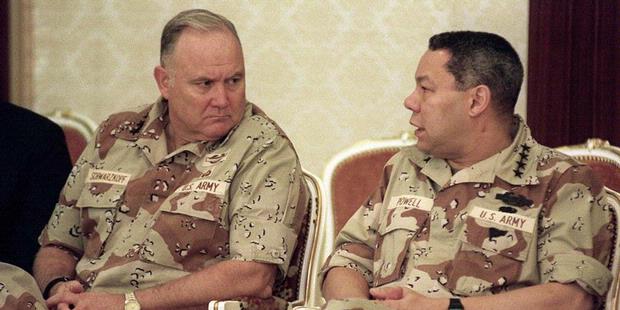
Jenderal Norman Schwarzkopf Meninggal DuniaNorman Schwarzkopf, jenderal Amerika Serikat yang memimpin Operasi Badai Gurun 1991, yang membebaskan Kuwait dari invasi Irak di bawah pimpinan Saddam Hussein, meninggal dunia pada usia 78 tahun, kata seorang pejabat AS, Kamis (27/12/2012).
Schwarzkopf, seorang pahlawan Amerika yang populer dengan sebutan "Badai Norman," meninggal di Tampa, tempat ia pensiun setelah tugas militer terakhirnya sebagai panglima tertinggi Pusat Komando AS.
Mantan Presiden George HW Bush, yang kini sedang sakit dan dalam perawatan intensif di Texas, adalah orang pertama yang mengeluarkan pernyataan berduka karena kehilangan orang yang dia pilih untuk memimpin perang yang kemudian memantapkan karier keduanya.
"Barbara dan saya berduka atas meninggalnya seorang patriot Amerika sejati dan salah satu pemimpin militer yang besar dari generasinya," kata Bush senior.
"Seorang anggota terkemuka Long Gray Line yang berasal dari West Point, Jenderal Norman Schwarzkopf, bagi saya, melambangkan pengakuan ’tugas, layanan, negara’ yang telah membela kebebasan dan melihat bangsa yang besar ini melalui sebagian besar upaya kami dalam mengatasi krisis internasional," kata Bush.
"Lebih dari itu, dia adalah seorang pria yang baik dan layak, serta seorang teman. Barbara dan saya mengirimkan ucapan belasungkawa kepada istrinya, Brenda, dan keluarganya yang bahagia."
Salah satu kalimat terkenal yang diucapkan Schwarzkopf jelang operasi Badai Gurun adalah saat dia mengulas kemampuan pasukan Irak dan Saddam Hussein. Tampak jelas Schwarzkopf adalah orang yang menghormati orang lain, termasuk musuhnya.

"Saddam Hussein bukan seorang perancang strategi. Dia juga tidak dididik secara militer. Dia bukan seorang ahli taktik. Dia juga bukan seorang jenderal atau seorang prajurit. Tapi lepas dari itu semua, dia (Saddam) adalah pemimpin militer yang andal. Saya ingin Anda tahu itu," katanya kala itu.

Operasi Badai Gurun yang dipimpinnya berhasil membebaskan Kuwait hanya dalam waktu 100 jam. Manuver perang daratnya saat menghadapi pasukan Irak mengundang banyak pujian dari pakar militer di seluruh dunia.